Moxon Leads
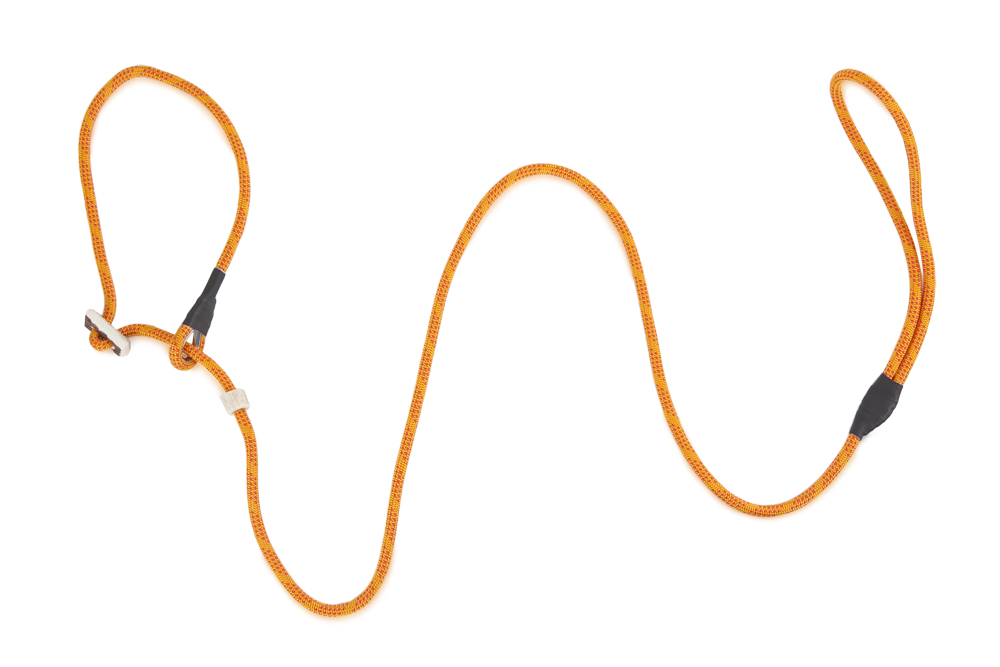
Firedog Moxon leash Profi 6 mm 150 cm orange/red with double hornstop


Very nice and practical handmade leash with double hornstop for training or hunting
This elegant adjustable leash is well known primarily from the retriever world - it has been developed based on many years of experience of professional dog trainers. Handle, leash and collar are in one piece. Thanks this practical design, the dog can not unexpectedly get out of the leash, on the other hand, when off the leash, he has no annoying collar which can cause an injury while moving in difficult terrain. The leash also allows immediate response to undesirable behavior of the dog on a leash (pulling on the leash, incorrect heelwork, etc.)
The Moxon leash is made from high-quality climbing rope, which ensures maximum resistance and durability. The collar part can be limited by horn stop. The stainless eyelet ensures a smooth glide. Very light and comfortable for handling.
The double hornstop allows the collar part to be adjusted not to choke the dog, which is ideal for puppies and young dogs.
Moxon leashes are available in different colours and lengths. After agreement, we can produce leash according your special requirements (length, type, ...). In case of your interest please contact us.
Material: 6 mm climbing rope (100 % polyamide), horn doublestop
Length: 110 cm, 130 cm, 150 cm
Warnings and Safety Instructions
- Collars and leashes are intended for controlling and handling dogs during walks, training and everyday activities.
- They are not suitable for lifting, hoisting or securing people or animals, and must not be used for climbing, safety-critical applications or towing.
- Do not use collars and leashes as a fixed tie-out system for unsupervised dogs.
- Always supervise your dog when it is wearing a collar and attached to a leash, especially around obstacles, fences, water and other dogs.
- Make sure the collar is adjusted correctly – it should be secure but comfortable and should not restrict breathing, swallowing or natural movement (as a rule, you should be able to fit two fingers between the collar and the dog’s neck).
- Keep long leashes and lines away from your own legs and from other people to avoid tripping hazards and rope burns.
- Do not allow your dog to chew the collar or leash. Chewing can quickly weaken the material and make it unsafe.
- Regularly check collars and leashes for signs of wear, damage or ageing (fraying, cuts, cracks, broken stitching, deformed or rusty hardware).
- Stop using the product and replace it immediately if you notice any damage or if the product shows significant wear.
Not a toy for children.
Important Usage Notes
- Choose a collar and leash size and model that are suitable for your dog’s size, weight, strength and activity level.
- Do not attach the leash to any damaged or non-compatible hardware (worn D-rings, open snap hooks, broken rings).
- Do not modify the product (e.g. cutting off parts, drilling holes, replacing hardware with non-original components), as this may reduce safety and durability.
- Avoid exposing collars and leashes to extreme forces (sudden strong jerks, tying to moving vehicles etc.), which can damage materials and hardware.
- Never allow your dog to swim while wearing a collar and leash attached. There is a risk of snagging or entanglement on obstacles under the water surface, which can lead to drowning.
Care and Maintenance
General care
- After each use, especially in mud, sand, salt water or snow, check the collar and leash for dirt and damage.
- Remove sand, mud and grit from buckles, rings and snap hooks to ensure proper function.
Biothane and similar coated webbing
- Rinse or wipe with clean water after contact with mud, salt or chemicals.
- For heavier soiling, wipe with a soft cloth or sponge and mild soap; rinse thoroughly.
- Do not use aggressive cleaners, solvents or strong chemicals, as these may damage the coating and hardware.
- Do not machine wash or tumble dry.
- Dry with a towel and let air dry at room temperature, away from direct heat sources (radiators, open flame).
- Superficial scratches or marks on the surface do not necessarily affect function but should be monitored over time.
Climbing ropes (polypropylene or polyamide) and polypropylene webbing/straps
- Rinse with lukewarm water to remove dirt, salt and sweat.
- If needed, hand wash in lukewarm water with a mild detergent.
- Do not use bleach, fabric softeners or aggressive cleaners.
- Do not machine wash.
- Do not tumble dry and do not dry on high heat sources; allow to air dry in a shaded, well-ventilated place.
- Do not iron ropes or webbing.
Leather collars and leashes
- Avoid soaking leather in water and do not machine wash or tumble dry.
- If leather becomes wet, gently wipe off excess water with a soft cloth and allow it to dry slowly at room temperature, away from direct heat sources (radiators, direct sun, open flame).
- Brush off dried dirt and mud with a soft brush or cloth; for heavier soiling, use a damp cloth and a mild leather cleaner if needed.
- Do not use harsh detergents, solvents, bleach or household cleaners on leather.
- Once dry, condition the leather periodically with a suitable leather balm or oil to keep it supple and help prevent cracking.
- Avoid prolonged exposure to salt water, chemicals or very high heat, as this can dry out and damage leather and stitching.
Storage Recommendations
- Store collars and leashes in a dry, well-ventilated place away from direct sunlight and heat sources.
- If the product becomes wet (rain, water work, washing), allow it to dry completely before storing.
- Avoid long-term contact with oils, solvents, chemicals and sharp objects during storage.
- Do not store heavy objects on top of collars and leashes to prevent deformation of ropes, webbing and hardware.
- Keep out of reach of children and pets when not in use, especially dogs that tend to chew.
Recycling and Environmental Responsibility
- These products may contain Biothane or other coated webbing (typically a plastic coating on a synthetic webbing core), polypropylene or polyamide rope, polypropylene webbing/straps, and metal hardware (rings, buckles, snap hooks) and plastic components (adjusters, clips).
- At the end of its life, dispose of the product in accordance with your local recycling and waste regulations.
- Where available, textile and rope parts (polypropylene/polyamide webbing and ropes) can be given to textile or plastic recycling, or disposed of in residual waste if no suitable collection exists.
- If possible, separate metal hardware (rings, snap hooks, buckles) and place them in metal recycling where such options are provided locally.
- Leather parts should be disposed of in residual waste if no specific collection for leather or composite materials exists.
- Do not burn the product and do not dispose of it in nature.
- FIREDOG, s.r.o.
- Sokolská 664/38
- Častá 900 89
- Slovakia
- ID no.: 44 919 441
- VAT No.: SK2022885326


