Wishlist
You need to login.
Care and Health
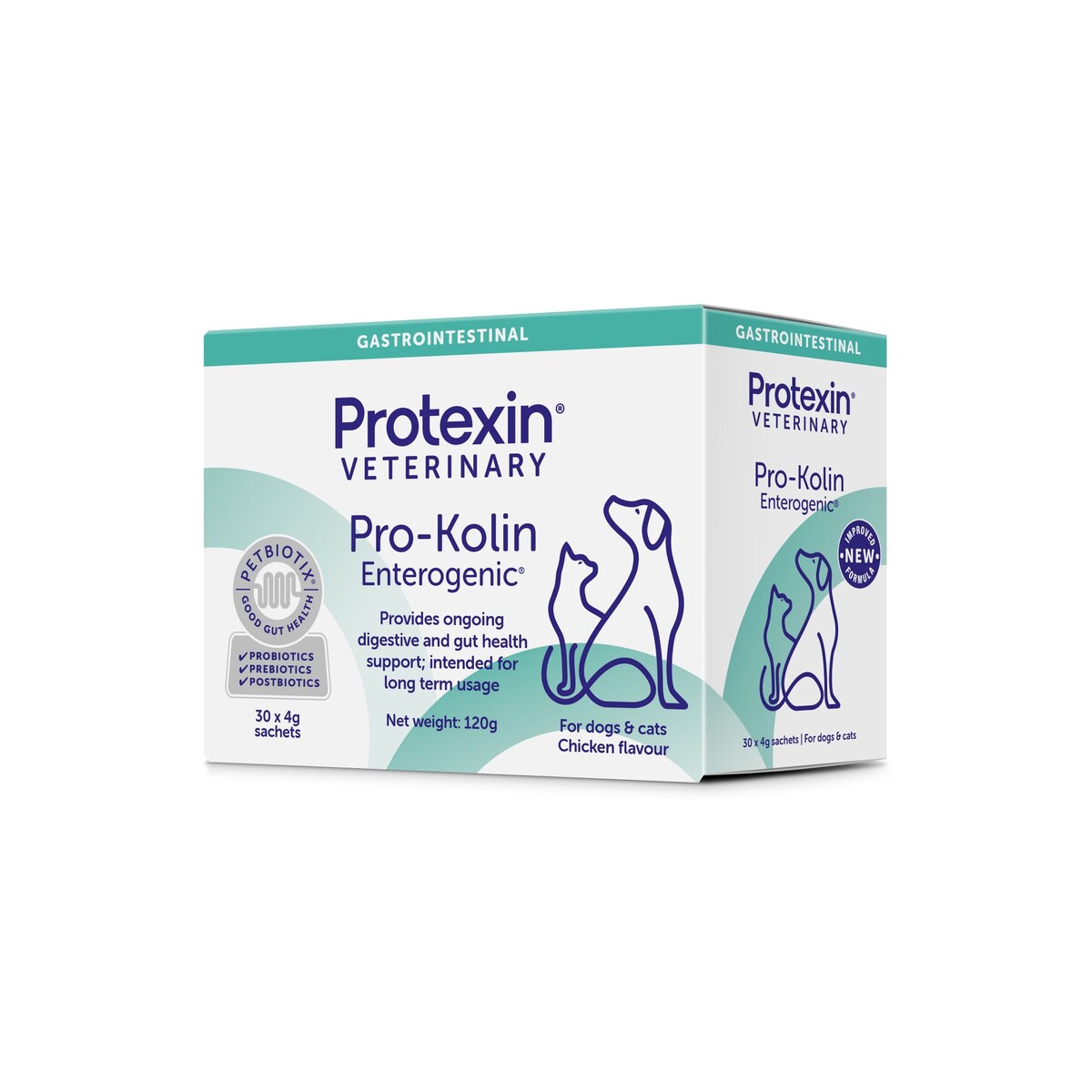
Protexin Pro-Kolin Enterogenic 30 x 4 g
SKU:117463
Manufacturer:Protexin Veterinary
In Stock:2 pieces
Availability
Shipping time: ships within 1-2 business days
Legal guarantee 2 years (EU notice)
Show information

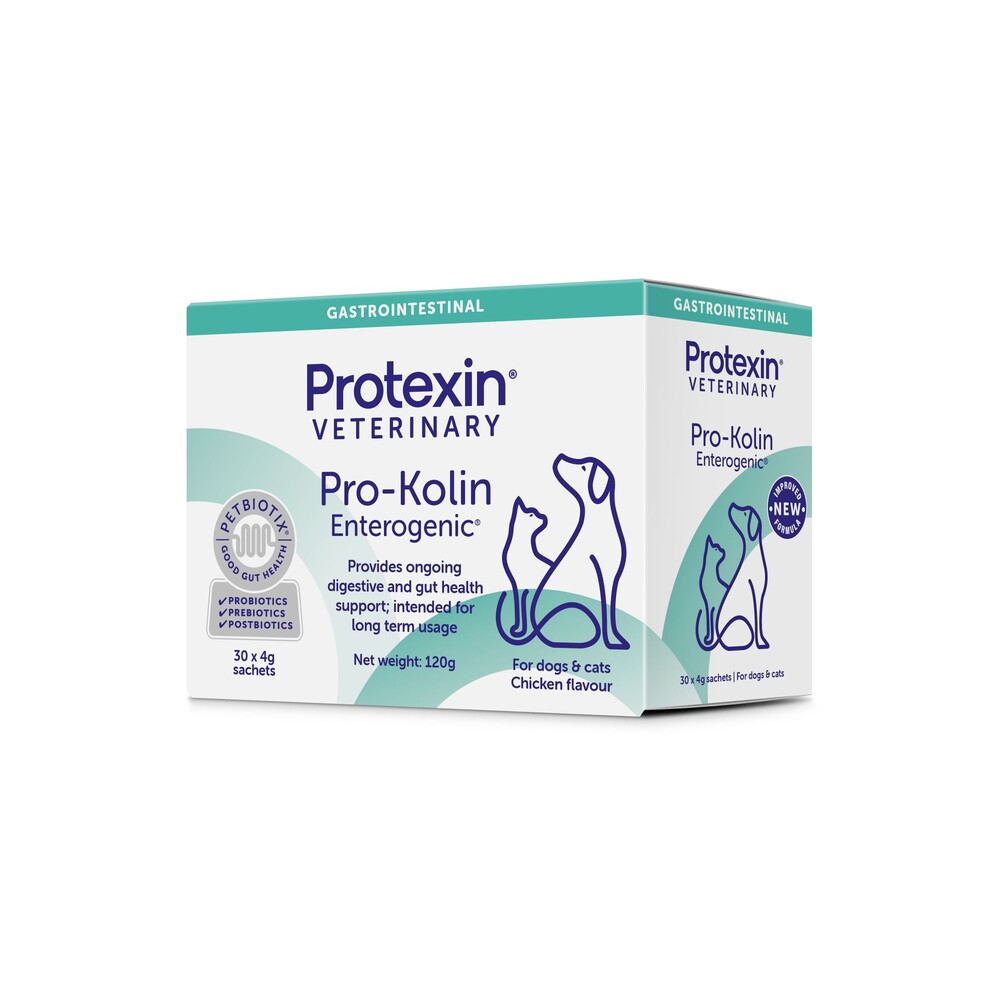
New and improved formulation!
Ingredients in Pro-Kolin Enterogenic act to support intestinal health, modulate the immune system, stabilise the microbiome and support normal cobalamin levels.
This provides gastrointestinal support and is intended to be used long term to support dogs and cats as they enjoy a happy, healthy life.
Ingredients
- Probiotics: Enterococcus faecium (DSM 10663/NCIMB 10415) 4b1707 – 1x10⁹ CFU/sachet
- Prebiotics: Fibresol-2 - slowly fermented to support the microbiome for a longer duration
- Postbiotics:
Inactivated Bifidobacterium animalis ssp. lactis CECT8145 – 5 x 10⁹ cells per sachet - shown to modulate gut health
Yeast cell wall - a source of mannan-oligosaccharide and beta-glucans which can modulate the immune system
- Vitamin B12 (cyanocobalamin) - supports normal cobalamin levels
- L-threonine - the amino acid most utilized by intestinal cells and supports the protective mucus layer.
- N-acetyl D-glucosamine - supports the mucus layer.
- Bentonite - a binding clay which absorbs water
Pro-Kolin Enterogenic has an artificial chicken flavouring to aid palatability; this contains no meat proteins.
Specification
Additives:
Gut Flora Stabilisers. Protexin probiotic Enterococcus faecium (DSM 10663/ NCIMB 10415) 4b1707 2.5 x 10¹¹ CFU/kg; 1 x 10⁹ CFU/sachet
Technological Additives: Bentonite-montmorillonite
Nutritional Additives: Vitamin B12 PXN-B12® (Cyanocobalamin) 0.5mg per sachet. L-Threonine
Sensory Additives: Artificial chicken flavour
Composition: Maltodextrin (Fibersol-2™ Prebiotic), Yeast products (source of mannan-oligosaccharide and beta-glucans), N-acetyl D-glucosamine, Inactivated Bifidobacterium animalis ssp. lactis CECT8145 – 5 x 10⁹ cells (postbiotic)
Instructions For Use
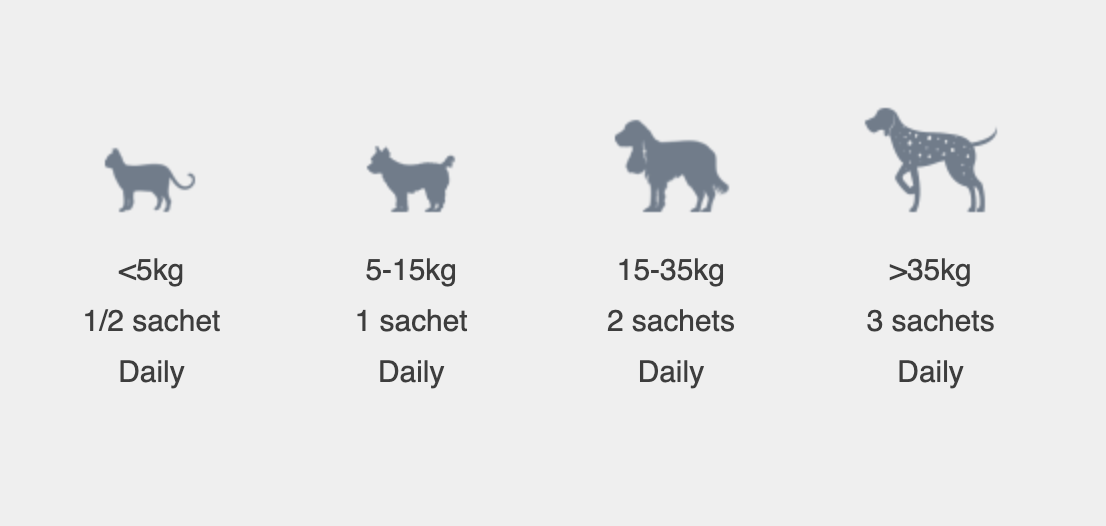
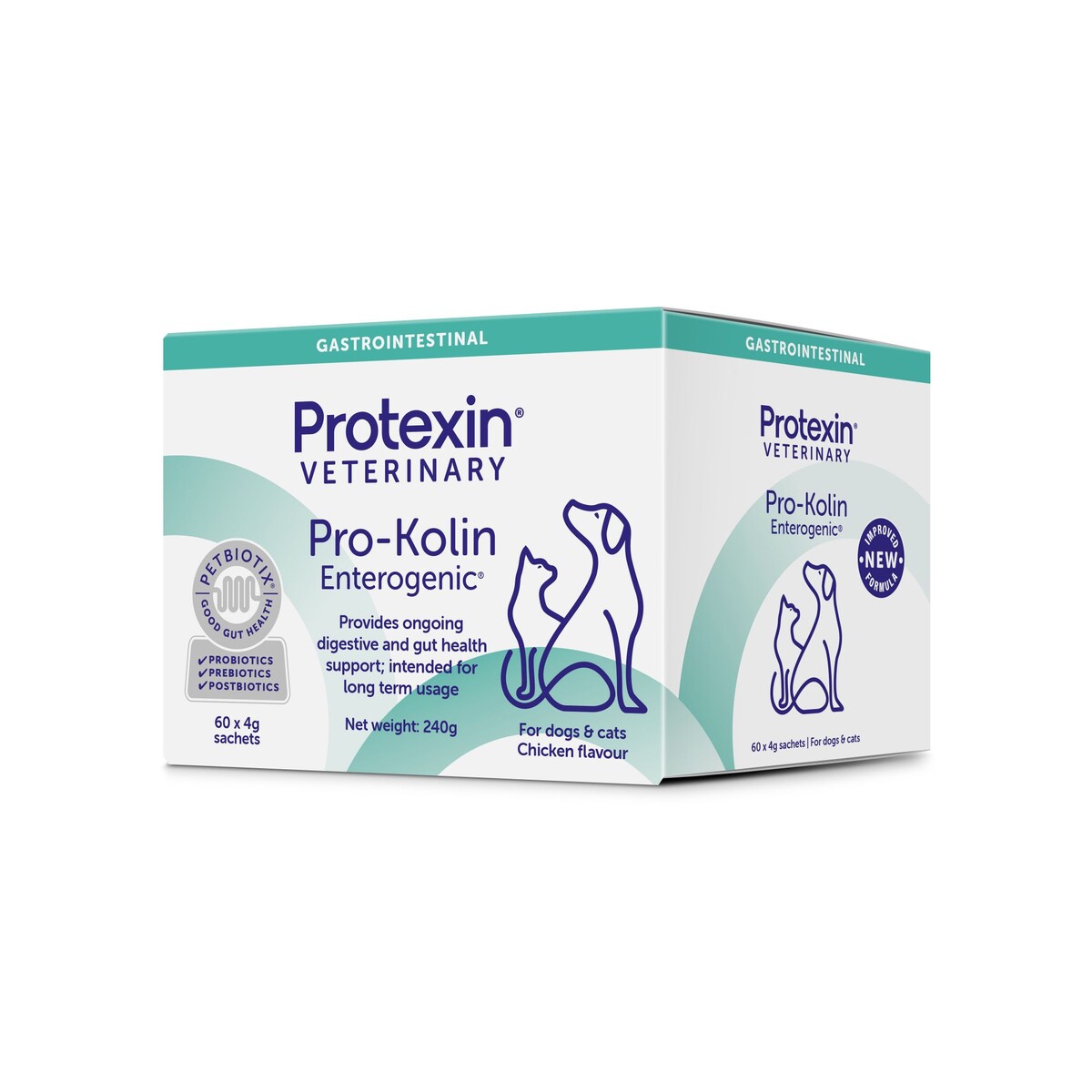
Pro-Kolin Enterogenic is supplied in a 4g sachet, contained within 30 and 60 sachet packs.
Add to the daily food for as long as considered necessary or as advised by your veterinary surgeon.
Simultaneous use alongside oral macrolides should be avoided.
We would recommend giving Pro-Kolin Enterogenic for a minimum of 1 month and, if your animal is responding well, it can be safely given longer-term.
Storage
Pro-Kolin Enterogenic has a 2 year shelf life from the date of manufacture. Store in a cool dry place. Pro-Kolin Enterogenic should be stored somewhere cool and dry – a cupboard is usually ideal.
Notes:
Powder colour has changed to white.
We recommend giving the entire dose of Pro-Kolin Enterogenic once daily but if your animal is unwilling to take the whole amount in one go then the dose can be split between 2 meals.
Pro-Kolin Enterogenic is suitable for use in both cats and dogs.
Pro-Kolin Enterogenic does not contain any soya and can safely be used in animals with soya allergies.
The flavouring in Pro-Kolin Enterogenic is entirely artificial and contains no actual chicken or derivatives. This artificial flavour has been designed to ensure there are no allergic responses from animals with allergies to specific meat proteins.
Pro-Kolin Enterogenic contains beta glucans and mannan-oligosaccharide (MOS); these are highly purified molecules derived from the yeast cell wall. Whilst these should not cause the same allergy response as whole yeast, we would advise to use with caution in animals with known yeast allergies.
Pro-Kolin Enterogenic does not contain wheat or wheat derivatives.
We advise ideally giving Pro-Kolin Enterogenic and antibiotics a few hours apart (antibiotics first).
As Pro-Kolin Enterogenic contains clay we would advise that you give the PKE a few hours later than other medications (if this is difficult then a minimum of 1 hour later) to ensure the absorption of other medications is not reduced by the presence of the clay; there is only a very small risk of this occurring but we want to ensure that your pet receives maximum benefit from any medications they may be taking.
There are no contraindications with Pro-Kolin Enterogenic and other medications (apart from administration timings). This means that Pro-Kolin Enterogenic can safely be given to your pet even if they are taking other medications.
You should always speak with your veterinary surgeon before using Pro-Kolin Enterogenic in pregnant or lactating animals. The Protexin Veterinary Technical Team will be able to advise your veterinary surgeon if they require any assistance with product choice in these cases.
If your pet is already receiving vitamin B12 injections you can still give Pro-Kolin Enterogenic. Vitamin B12 is a water soluble vitamin and so any excess will be safely excreted in the urine.
The contents of the sachet may be mixed with food. If your pet eats dry food you can wet the food with a small amount of water so that the powder sticks to the kibble. It can alternatively be mixed with lukewarm water to make a paste, which can be mixed with food or syringed directly into the mouth. We recommend that this product is administered once a day.
Pro-Kolin Enterogenic should never be mixed with hot food or mixed with food prior to cooking as this will kill the beneficial bacteria (probiotic). We advise letting food cool to no more than ‘lukewarm’ prior to mixing in Pro-Kolin Enterogenic.
Pro-Kolin Enterogenic can be mixed with cold or lukewarm water to form a paste.
Pro-Kolin Enterogenic is safe to be given alongside all other Protexin products; although we advise speaking to your veterinary surgeon before using Pro-Kolin Enterogenic alongside Pro-Enzorb or Cobalaplex as these products also contain cobalamin (Vitamin B12).
Pro-Kolin Enterogenic can be used from 8 weeks of age. However we advise that all animals are assessed by a veterinary surgeon prior to starting supplementation with Pro-Kolin Enterogenic.
Complementary feed for dogs. Not for human consumption.
Use as directed. Do not exceed the recommended daily amount.
Provide fresh drinking water at all times.
If your dog is on medication or has a diagnosed condition, consult a veterinarian before use.
Discontinue use and seek veterinary advice if adverse reactions occur.
Store tightly closed, in a cool, dry place, away from children and animals.
Probiotics / Pre- & Postbiotics
Give at least 2–3 hours apart from oral antibiotics unless your vet advises otherwise.
For dogs with chronic GI disease or persistent diarrhoea, seek veterinary guidance.
Yeast / B-vitamin products (e.g., brewer’s yeast, B-complex)
Contains yeast: avoid if your pet has known yeast hypersensitivity.
May not be suitable for dogs on strict low-purine diets (consult your vet).
Joint supplements (glucosamine, chondroitin, MSM, green-lipped mussel, collagen)
Stop 7 days before planned surgery unless your vet advises otherwise.
Shellfish-derived ingredients present (check allergy risk).
Omega oils (salmon oil, fish oil, krill)
Refrigerate after opening; use within the indicated period to avoid rancidity.
High-fat supplements may be unsuitable for dogs with pancreatitis history - consult your vet.
Cod liver–based oils: avoid stacking with vitamin A/D multivitamins.
Multivitamins / Mineral mixes
Do not combine with other vitamin/mineral products to avoid excessive intake (especially vitamins A & D, calcium, iodine).
If feeding a complete diet, additional supplementation is usually unnecessary unless advised by a vet.
Calming aids (tryptophan, L-theanine, valerian, herbs)
May cause mild drowsiness; monitor during first use.
Do not combine with sedatives without veterinary advice.
Electrolytes / Rehydration
Intended for short-term use; seek vet advice if vomiting/diarrhoea persists >24 hours or if your dog is lethargic.
Do not use as sole water source.
Fibre / GI binders (psyllium, pectin, bentonite, charcoal)
Give at least 2–3 hours apart from oral medicines to avoid reduced absorption.
Use short-term unless a vet recommends otherwise.
Kelp / seaweed (ioine sources)
Check total iodine intake; avoid in dogs with thyroid disease unless your vet agrees.
Liver-rich treats/supplements
High natural vitamin A content - do not combine with high-A multivitamins or cod-liver oil.
Contact
Address
- FIREDOG, s.r.o.
- Sokolská 664/38
- Častá 900 89
- Slovakia
- ID no.: 44 919 441
- VAT No.: SK2022885326


